01cooling & heating
Heating & cooling repair
Diagnosis and repair for air conditioners, heat pumps and heating systems — so the cause is fixed, not just the symptom.
Same-day service · 1-year parts warranty · Lic. #1055791
AC and furnace repair, cause first
When the air conditioner quits in the middle of a Santa Clarita heat wave, or the furnace won’t light on a cold January night, the fix starts with finding out exactly why. We repair air conditioners, heat pumps and gas furnaces in homes across the Santa Clarita Valley, Valencia, Simi Valley and the north San Fernando Valley.
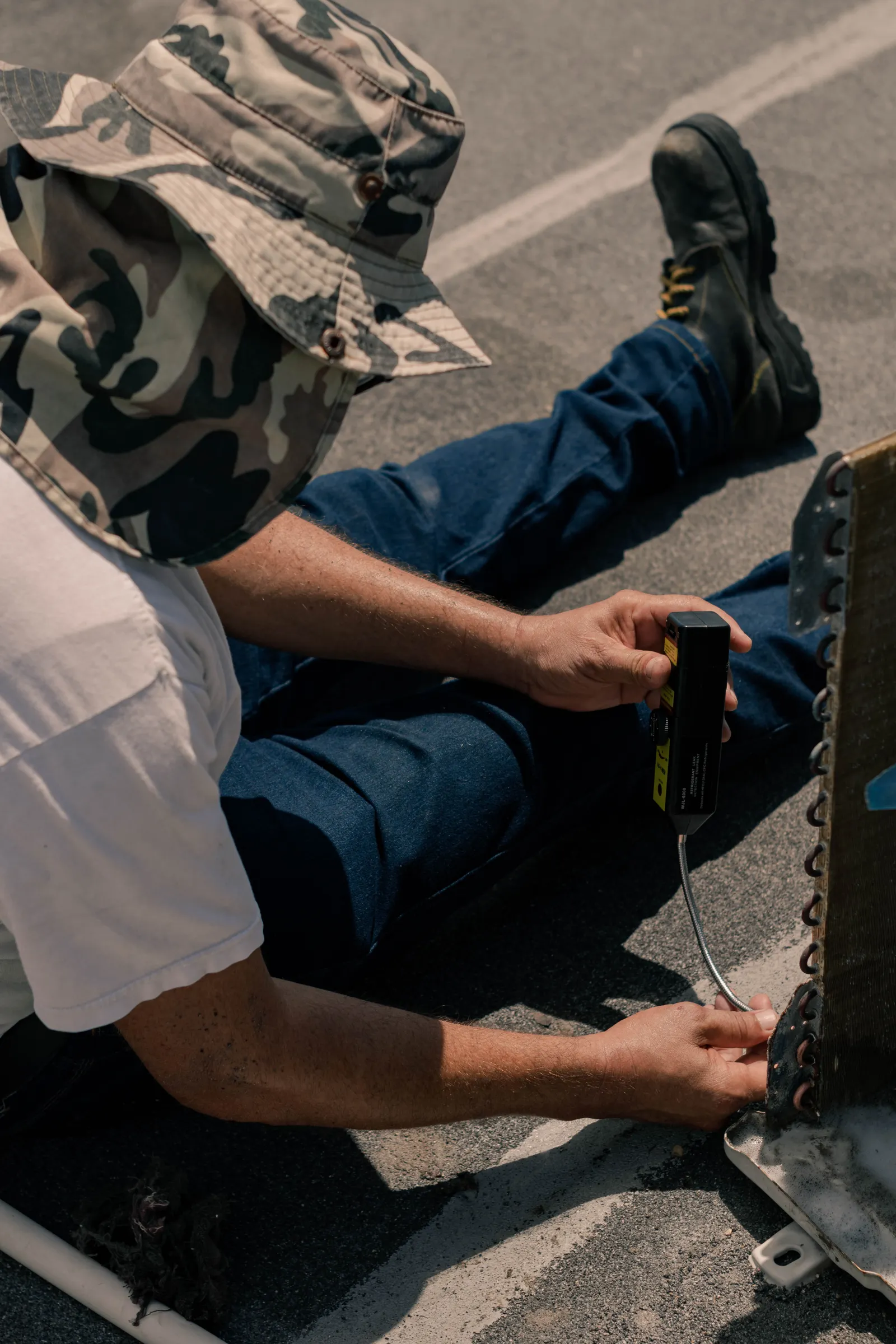
Most no-cool and no-heat calls come down to one failed part — a capacitor, a contactor, a burned wire, an igniter, a gas valve — or to a refrigerant leak that has finally caught up with the system. We test until we know which one, explain it in plain terms and show you what we found.
You get the price in writing before any work begins, and every part we install carries a 1-year warranty. Same-day service is available, and before we leave we run the system through a full cycle to make sure it’s actually working, not just running.
What we work on
- Air conditioners that run but don’t cool
- Heat pumps in cooling and heating mode
- Gas furnaces that won’t light or keep shutting off
- Capacitors, contactors, fan motors and wiring
- Gas valves, igniters and control boards
- Thermostat and control problems
01When to call
Signs your AC or furnace needs a repair
Warm air from the vents with the AC on
The indoor fan is moving air, but nothing is cooling it. Common causes are an outdoor unit that isn’t running — often a failed capacitor or contactor — low refrigerant from a leak, or a coil too dirty to move heat.
The outdoor unit hums but the fan won’t spin
A humming condenser with a still fan usually points to a weak or failed capacitor or a seized fan motor. Switch the system off: running it like this can overheat the compressor.
Ice on the copper lines or the indoor coil
Frost means the coil is running colder than it should, usually from restricted airflow — a clogged filter, a weak blower — or from low refrigerant. The ice is a symptom, not the problem itself.
Clicking, but the furnace never lights
Repeated clicks without a flame usually mean an ignition problem: a worn igniter, a dirty flame sensor or a gas valve that isn’t opening. Most furnaces lock themselves out after a few failed tries.
The system starts and stops every few minutes
Short cycling wears parts out fast. Causes range from a dirty filter or an overheating furnace to a faulty thermostat, a failing limit switch or a system that is too large for the house.
The breaker trips when the AC kicks on
A breaker that keeps tripping is telling you something is drawing too much current — a shorted motor, a struggling compressor or damaged wiring. Don’t keep resetting it.
Water around the indoor unit
A clogged condensate drain or a cracked drain pan lets water overflow, and a frozen coil can drip as it thaws. Left alone, it can stain ceilings and damage floors.
A sudden jump in the electric bill
When the bill climbs and your habits haven’t changed, the system is usually running longer to do the same job — a dirty coil, a slow refrigerant leak or a part that is starting to fail.
02Before you call
Safe checks you can do first.
- Thermostat. Set to Cool or Heat, the set point a few degrees past room temperature, and fresh batteries if it uses them.
- Breakers. Look for a tripped breaker for the indoor unit, the outdoor unit or the furnace. Reset it once — if it trips again, leave it off.
- Air filter. If it’s grey and matted, replace it. A blocked filter alone can stop cooling, or make a furnace overheat and shut down.
- Furnace switch and door. Furnaces have a light-switch-style power switch nearby, and most won’t run unless the front panel is fully closed.
- Outdoor unit. Make sure it isn’t buried in leaves or crowded by plants, and that the disconnect switch on the wall next to it is on.
03What we look at
What we check on a repair visit
- 01
Electrical components
Capacitors, contactors, relays and wiring are tested with a meter, not judged by eye. Heat is hard on electrical parts, and a burned terminal or a weak capacitor is one of the most common reasons an outdoor unit won’t start.
- 02
Refrigerant pressures and temperatures
Gauge readings and line temperatures show whether the system is charged correctly. If it’s low, the real question is where it’s leaking — topping it up without that answer isn’t a repair.
- 03
Motors and airflow
The outdoor fan motor and the indoor blower, how much air is actually moving, and the filters, coils and returns that can choke it.
- 04
Ignition and burners
On a gas furnace: the igniter, the flame sensor, the burners and the flame itself, and the gas valve that feeds them.
- 05
Safety controls and venting
Limit switches, pressure switches and the inducer motor shut a furnace down when something is wrong. When one trips, we find out why instead of just resetting it — and check the vent pipe for leaks and blockages.
- 06
Thermostat and control board
Thermostat wiring and settings, and the control board in the furnace or air handler, including any fault codes it has stored.
04Local conditions
AC repair in Santa Clarita: why summer is hard on systems
Summer in the Santa Clarita Valley is long and hot, and on the worst days an air conditioner may run almost nonstop from late morning well into the night. That is exactly when weak capacitors, worn contactors and tired fan motors give out: heat is hard on electrical parts, and the outdoor unit sits in full sun.
The Santa Ana winds pack dust, leaves and grit into the outdoor coil, so the system has to work harder for the same cooling. After a windy spell, a gentle rinse of the outdoor unit with the power off and a clean filter go a long way.
Winters are mild, so a furnace or heat pump can sit unused for months. The first cold night is often when a dusty burner, a weak igniter or a dead thermostat battery shows up. From Valencia and Newhall to Simi Valley and the north San Fernando Valley, the pattern is the same.
05How it works
From call to comfort.
- 01
Request service
Call (323) 631-8683 or send a short request online — name, phone and what’s happening.
- 02
Diagnosis
We inspect the system on site and explain what we find before recommending any work.
- 03
Price in writing
Every home is priced individually. You get the agreed price in writing before any work begins — no surprises.
- 04
The work
Clean, precise work — and your system back to keeping the house comfortable.
★Customer reviews
What customers say
-
★★★★★
Cher W. · Google review“Tony was able to come out the same day.”
-
★★★★★
Stephen L. · Google review“The technician fixed everything the same day and made sure the system was running perfectly.”
-
★★★★★
Carolyn Y. · Google review“They replaced my capacitor for a good price and didn’t try to upsell me…”
FAQQuestions
Questions,answered.
Still not sure what’s going on? Call and describe it — we’ll tell you what we’d check first.
(323) 631-8683Why does my air conditioner freeze up?
Ice forms when the indoor coil gets colder than freezing. The usual causes are too little air moving across it — a clogged filter, a weak blower, closed or blocked vents — or too little refrigerant because of a leak. Turn cooling off and let the ice melt with the fan on, then replace the filter if it’s dirty. If it freezes again, it needs a diagnosis: a frozen system can send liquid refrigerant back to the compressor and damage it.
What does an AC capacitor do, and why does it fail?
A capacitor gives the compressor and fan motors the jolt they need to start, and helps them run smoothly. It’s a small part that wears out with heat and age, and one of the most common reasons an outdoor unit hums but won’t start. A weak capacitor can also make motors run hot. It’s tested with a meter and replaced — but it can hold a charge even with the power off, so it isn’t a do-it-yourself part.
Does refrigerant need to be topped up every year?
No. An air conditioner or heat pump is a sealed system; it doesn’t use refrigerant up the way a car uses fuel. If it’s low, it’s leaking somewhere. Adding refrigerant without finding the leak gets it cooling for a while, but the problem comes back and the compressor works under strain in the meantime. The real repair is to find the leak, fix it and then charge the system correctly.
Why does my furnace start and then shut off after a few minutes?
This is usually a safety control doing its job. A dirty flame sensor can’t confirm the flame, so the furnace shuts the gas off. An overheating furnace — often from a clogged filter or a blocked return — trips the high-limit switch. A blocked vent or a failing inducer motor can trip the pressure switch. Replace the filter first; if it keeps happening, the control needs to be tested and the reason found, never bypassed.
Why is water leaking from my indoor unit?
Air conditioners pull moisture out of the air and carry it away through a condensate drain line. When that line clogs with algae or debris, water backs up and overflows the pan. A frozen coil that thaws can also drip more than the drain can handle. Some systems have a float switch that turns cooling off when the pan fills, which can look like a no-cool problem. Clearing the drain and finding out why it clogged usually solves it.
Is it safe to keep running my AC if it’s making a strange noise?
It depends on the sound, but it’s best not to push it. Grinding or screeching often means a failing motor bearing; loud buzzing can be an electrical part on its way out; banging can mean something has come loose. Running the system in that state can turn a single-part repair into a much bigger one. Switch it off, note what you heard and when, and call — those details help the diagnosis.
RFSService request
Need it looked at?Call or send a request.
- Request
- Diagnosis
- Price in writing
- Repair
Same-day service · $20 off your first repair for new customers · Financing available