
02maintenance
Maintenance & service
Routine service from a team with more than 35 years of experience installing and servicing heating and cooling systems.
Same-day service · 1-year parts warranty · Lic. #1055791
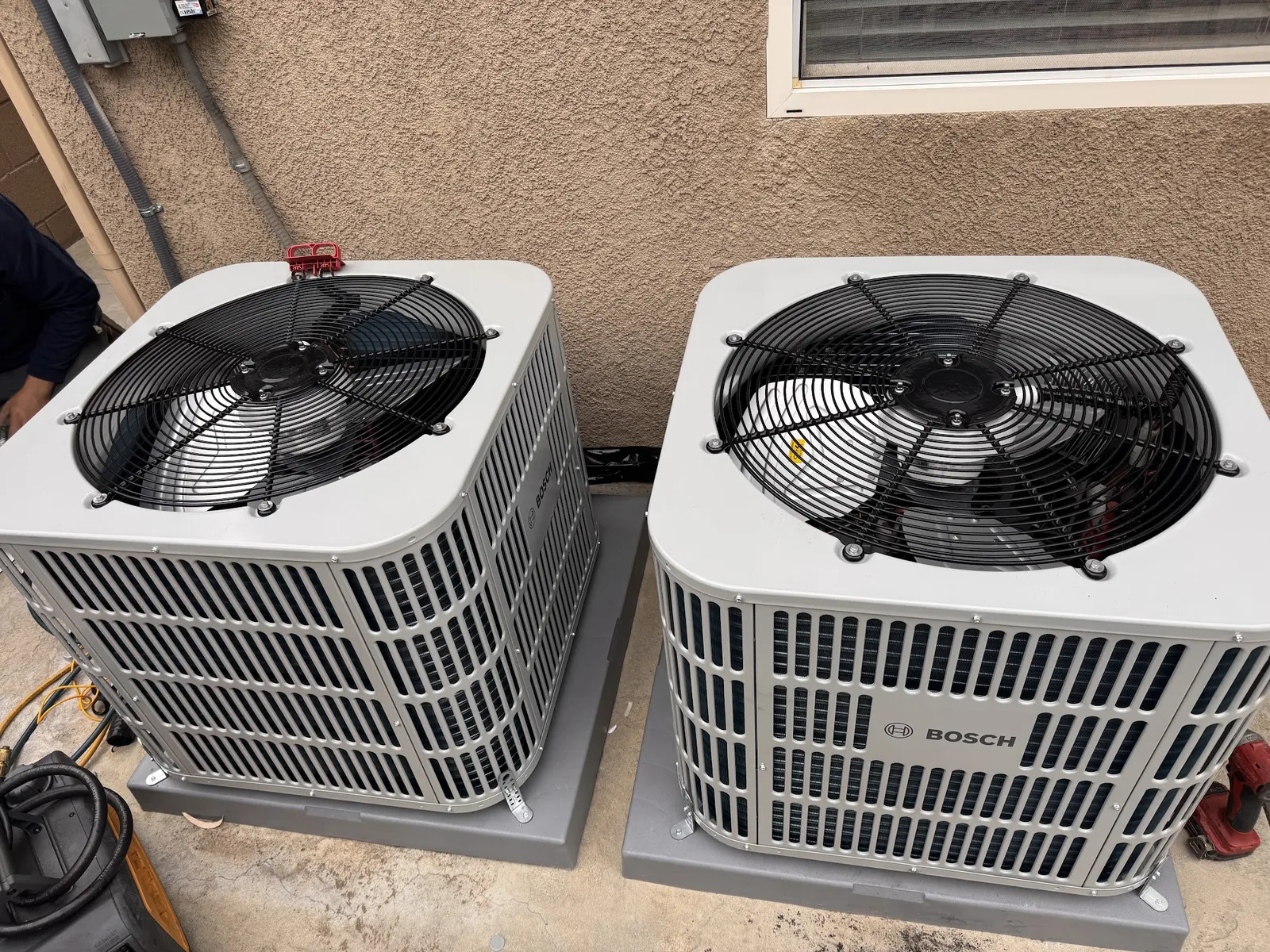
Maintenance that looks for trouble early
A heating and cooling system rarely fails without warning. Contacts pit, capacitors weaken, coils load up with dust, drain lines grow algae, and each small change makes the equipment work a little harder. A maintenance visit is the time to find those changes while they are still small and cheap to put right.
We service air conditioners, heat pumps and furnaces for homeowners in Santa Clarita, Valencia, Newhall, Simi Valley and the north San Fernando Valley. The approach is the same one we use on repairs: look closely, measure rather than guess, and tell you plainly what is fine, what is worth watching and what needs attention now.
Nothing is replaced on a maintenance visit without your say-so. If we find a part on its way out, you get the reason and the price in writing first.
What we work on
- Air conditioner tune-ups before summer
- Furnace checks before winter
- Heat pump service, spring and fall
- Filters, drain lines and coils
- Electrical connections and capacitors
- Thermostat and airflow checks
01When to call
Signs your system is overdue for a tune-up
Longer run times on ordinary days
If the system runs and runs to hold a temperature it used to reach easily, something is slowing heat transfer — most often a dirty coil, a clogged filter or a refrigerant charge that has drifted.
Uneven rooms that used to be comfortable
A room that has slowly become warmer in summer or cooler in winter often points to falling airflow: a filter, a dirty blower wheel or a duct that has started to come apart.
A musty smell when the system starts
Moisture and dust on the indoor coil or in the drain pan can grow mold and bacteria. Cleaning the coil area and clearing the drain line usually takes the smell away.
A burning-dust smell on the first cold day
A brief dusty smell when the furnace first runs in fall is normal. If it lingers, or smells electrical, switch the furnace off and have it checked.
The outdoor unit looks matted with dirt
Fins packed with dust, cottonwood fluff or leaves can’t release heat. The system then runs hotter and longer, which is hard on the compressor and fan motor.
Water stains near the furnace or air handler
Slow leaks from a partly blocked condensate line often show up as stains or rust long before a pan actually overflows.
It has been a year or more since the last service
Even a system that seems fine benefits from a look before the season it works hardest in — especially after a long, hot Santa Clarita summer.
02Before you call
Safe checks you can do first.
- Filter. Check the size printed on the frame and keep a spare on hand. Note the airflow arrow — it points toward the furnace or air handler.
- Outdoor clearance. Keep plants, fences and stored items a couple of feet back from the outdoor unit so it can breathe.
- Gentle rinse. With the power switched off at the disconnect, rinse the outdoor coil from the outside with a garden hose. No pressure washer — it flattens the fins.
- Supply and return vents. Make sure furniture and rugs aren’t blocking them, and that closed vents aren’t starving the system of air.
03What we look at
What a maintenance visit covers
- 01
Coils and condensate
The outdoor coil is checked and cleaned, and the indoor coil and drain pan inspected. The condensate line is cleared so water can drain freely.
- 02
Electrical connections
Terminals are tightened and checked for heat damage, capacitors are tested against their rating, and contactors are inspected for pitting.
- 03
Refrigerant performance
Pressures and temperatures are read to confirm the system is cooling or heating as it should. A drop over time is the first sign of a slow leak.
- 04
Airflow and blower
Filter, blower wheel and motor are checked, along with how freely air moves through the system — the foundation for everything else working well.
- 05
Furnace burners and safety
On gas furnaces, burners, igniter and flame sensor are inspected, safety switches are tested and the flue is checked for leaks or blockage.
- 06
Thermostat and cycle test
Settings and wiring are checked, and the system is run through a full cycle in both modes where it has them, to make sure it starts, runs and stops correctly.
04Local conditions
AC maintenance in Santa Clarita: timing matters
In the Santa Clarita Valley the air conditioner does the heavy lifting. Spring is the best time for a cooling check — before the first run of 100-degree days, when a weak capacitor or a dirty coil is still an easy fix and not a breakdown in July.
Dust, pollen and ash settle on outdoor coils all year, and the Santa Ana winds add a layer every fall. A clean coil and a fresh filter after a windy stretch keep the system from straining. Homes near open land in Canyon Country or the hills above Simi Valley tend to see this faster.
Winters are short and mild, but a furnace that sits idle for months still needs a look before it is called on. A fall check of the burners, igniter and flue is quick, and a heat pump that heats and cools benefits from a visit in both seasons.
05How it works
From call to comfort.
- 01
Request service
Call (323) 631-8683 or send a short request online — name, phone and what’s happening.
- 02
Diagnosis
We inspect the system on site and explain what we find before recommending any work.
- 03
Price in writing
Every home is priced individually. You get the agreed price in writing before any work begins — no surprises.
- 04
The work
Clean, precise work — and your system back to keeping the house comfortable.
★Customer reviews
What customers say
-
★★★★★
Alena K. · Google review“I appreciated that he was straightforward and did not recommend anything unnecessary.”
-
★★★★★
Brett G. · Google review“He showed up on time, figured out the issue quickly…”
-
★★★★★
Richard P. · Google review“He also had the part to fix it right there.”
FAQQuestions
Questions,answered.
Still not sure what’s going on? Call and describe it — we’ll tell you what we’d check first.
(323) 631-8683What is the difference between a tune-up and a repair visit?
A repair visit starts with a problem — no cooling, no heat, a noise — and works back to its cause. A tune-up starts with a system that is working and looks for what is wearing out: weak capacitors, pitted contacts, dirty coils, slow drains, drifting refrigerant readings. The checks overlap, but the goal is different. One fixes a failure; the other aims to prevent the next one and keep the system running efficiently.
When is the best time to schedule AC maintenance in Santa Clarita?
Spring, before the long stretch of hot weather begins. A cooling check in March, April or May gives time to deal with anything found before the system is running all day. Fall is the time for the furnace, ahead of the first cold nights. If you only do one visit a year and have an air conditioner and a furnace, spring is usually the better choice in this climate.
Does a heat pump need different maintenance than an air conditioner?
Mostly the same work — coils, electrical parts, refrigerant readings, airflow, drain line — plus the parts that only a heat pump has. The reversing valve that switches between heating and cooling, the defrost controls and the auxiliary heat are all checked. Because a heat pump runs in both summer and winter, it gets more hours of use than an air conditioner and benefits from a check before each season.
Can I clean my outdoor unit myself?
Yes, within limits. Switch the power off at the disconnect next to the unit, clear away leaves and debris, and rinse the coil gently with a garden hose from the outside in. Don’t use a pressure washer, harsh chemicals or tools on the fins, and don’t open the electrical panel. A deeper coil cleaning and the electrical checks are part of a maintenance visit.
Does maintenance lower energy bills?
It helps keep them where they should be. A dirty filter, a clogged coil or a refrigerant charge that has drifted all make a system run longer to deliver the same comfort, and longer run times mean higher bills. Maintenance restores airflow and heat transfer, so the system does its job without working harder than it has to. It can’t make an old, inefficient unit new again, but it stops a good one from slipping.
What should I check after a wind storm or wildfire smoke?
Look at the outdoor unit first: clear leaves, branches and debris from around and on top of it, and rinse the coil gently with the power off if it is coated in dust or ash. Then check the air filter, which can load up quickly when smoke or dust gets into the house. If the filter is dark after only a few weeks, replace it again and consider better filtration.
RFSService request
Need it looked at?Call or send a request.
- Request
- Diagnosis
- Price in writing
- Repair
Same-day service · $20 off your first repair for new customers · Financing available